
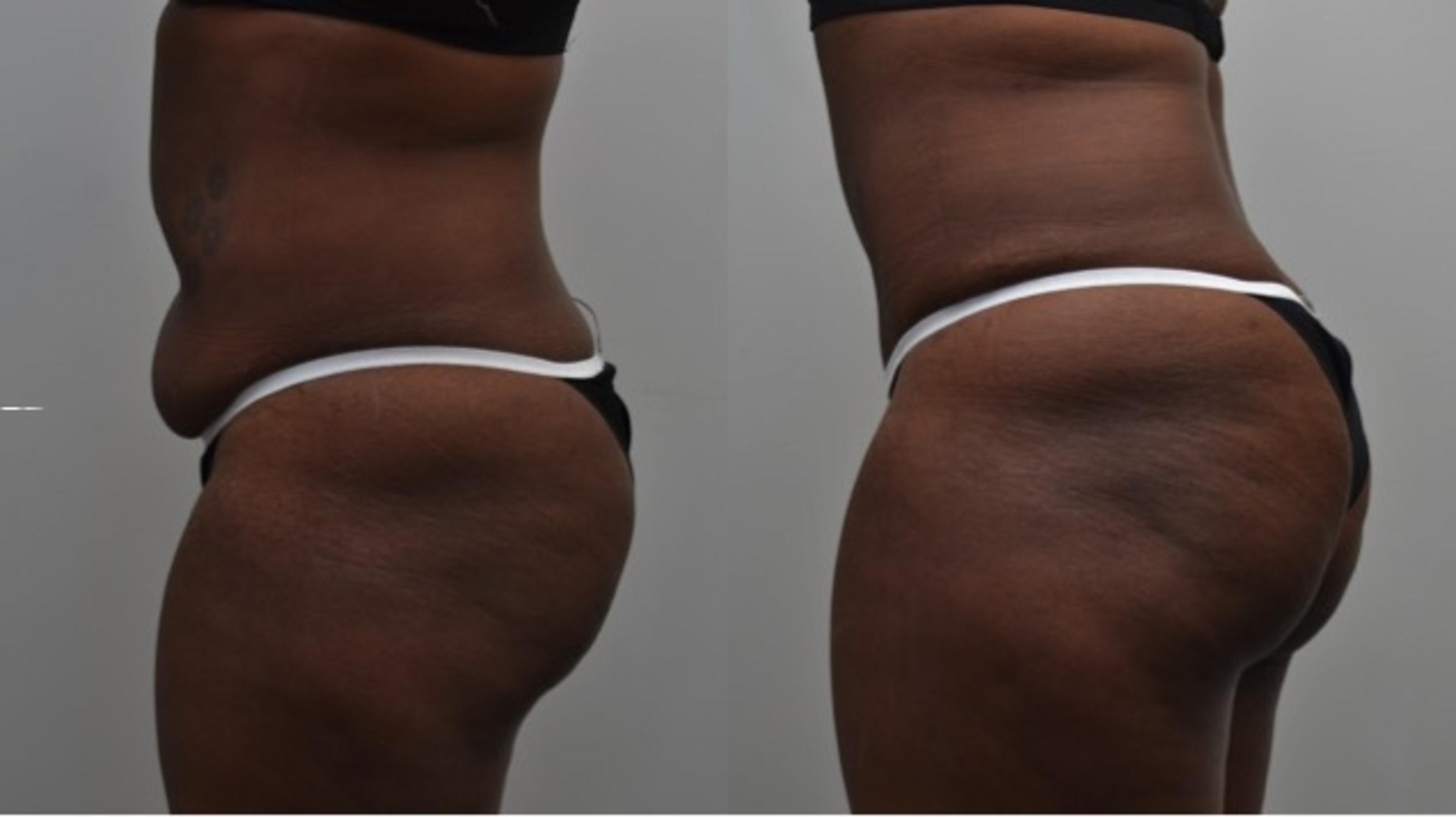

What Is a Brazilian Butt Lift?
Also known as a safe subcutaneous buttock augmentation (SSBA), this surgical procedure utilizes fat liposuctioned from areas of your body and grafted to your buttocks to add fullness and create a more curvaceous, alluring-looking derrière.
How Does the Procedure Work?
Fat is liposuctioned from the thighs, arms, abdomen, back, and waistline. This extracted fat is then washed, separated from fluid, and loaded into a syringe for transfer. We then inject the fat precisely into the buttocks to enhance their shape and size.
In some cases, a portion of the transferred fat may not take to the relocation, so we may inject more than necessary to ensure results meet your expectations and goals. If a majority of the cells do not endure, regrafting may be necessary in the future.
Who Is a Good Candidate for Surgery?
The best candidates for a Brazilian butt lift are those seeking a change in buttock contour who have lost their natural curves due to age or changes in weight and have enough pockets of fat for grafting.
You should be in generally good health, free from any infections, and able to tolerate local anesthesia and surgery. Other conditions may include a healthy and stable weight, a lifestyle with regular exercise and diet, and abstinence from smoking. Be sure to discuss all of your surgical needs and options with us.
What to Expect From the Procedure
In preparation for your procedure, you will be recommended to stop alcohol and vaping one month before your procedure. We check for 15 drugs on the morning of the procedure. If you are positive, your procedure will be cancelled and you will not be entitled to any refund.
You will also have to stop taking any medication that could adversely interact with anesthesia, as well as aspirin products and blood-thinning medications, two weeks prior.
On the day of surgery, you will have to avoid eating for at least eight hours and refrain from drinking beverages at least six hours before your appointment. You may also be advised to wear comfortable, loose-fitting clothing and arrange a ride home with a 24-hour chaperone.
What Is Recovery Like?
Following your surgery, you will not be able to sit on your buttocks or sleep on your back for about two weeks, or until the area has healed enough. You may experience swelling for several weeks; however, pain should be minimal.
We will prescribe pain medications. You can resume light daily activities the very day after your procedure but should not perform strenuous activity or lift heavy objects.
After this period, your surgeon will evaluate whether you have healed enough to sit on your buttocks using a donut seat or pillows under your thighs. You cannot resume prolonged sitting for approximately eight weeks and can return to work in 10–14 days.
It can take up to six months to fully heal and see the final results.
Results & How Long They Last
By the end of your recovery period, you should have more voluminous, perky buttocks, as well as improved body shape and proportions.
A Brazilian butt lift should last forever, but in some cases, if the transfer does not take hold, a patient may require more than one procedure to attain the look they want. Typically, by the three-month mark, you can be fairly certain whether the transfer bonded effectively.
Weight fluctuation can affect the outcome of this surgery. If you gain weight, your buttocks can become enlarged, and smaller if you lose weight. The fat cells added to your buttocks can grow and shrink, so it is best to maintain a stable weight to preserve results.
Adding healthy fats to your meals immediately after the procedure will help support the survival of the fat. You may also take a fish oil supplement. Examples of good fats are:
- Olive, canola, peanut, and sesame oils
- Avocados
- Olives
- Nuts such as almonds, peanuts, macadamia, hazelnuts, pecans, and cashews
- Peanut butter
Polyunsaturated fat – good sources include:
- Sunflower, sesame, and pumpkin seeds
- Flaxseed
- Walnuts
- Fatty fish such as salmon, tuna, mackerel, herring, trout, and sardines, as well as fish oil
- Soybean and safflower oil
- Soy milk
Adding tofu to your diet during the early recovery period may help with better fat retention.
Potential Risks & Side Effects
Brazilian butt lifts are considered safe procedures in the right hands. As with all surgeries, there is potential risk of complications or side effects, including:
- Infection
- Scarring
- Lumpy or uneven skin texture
- Prolonged pain
- Fat necrosis
- Buttocks not being as curvy as desired
- Hip dips may return
What Is Lipo Body Sculpting?
As a traditional technique, liposuction involves removing fat through a cannula—a fine, hollow metal or plastic tube—inserted into the skin. A high-powered vacuum is applied through the cannula, which removes the unwanted fat.
Lipo body sculpting is carried out under local anesthesia, and clients are also sedated with oral medications. This is called conscious sedation.
Tiny incisions are made in the skin to insert the cannulas. Once the cannulas are in place, treatment begins and the fat is removed by vacuum suctioning. After the treatment is finished, drains are placed into the liposuction area for speedy healing.
The whole procedure can take from one to four hours, depending on the size of the area and volume of fat to be removed. You go home the same day.
What Is the Recovery Time?
It is normal for swelling, bruising, and soreness to take about two to three weeks to settle down. If you are travelling from overseas, you will need to be in Jamaica for two weeks.
It is likely that you will experience some pain, discomfort, and soreness. You will undergo several sessions of manual lymphatic drainage with us, and you will be required to wear elastic compression garments for up to six months.
Results of body sculpting will be better if you are in good health and are already doing what you can to keep weight down through diet and exercise. Muscle definition will be clearer after liposuction if you already have good muscle tone underneath the fat layer.
It is important to remember that skin has to reshape once fat is removed, so elastic skin will show the best results, while people with looser skin may experience some sagging.
What Are the Risks and Side Effects?
Liposuction of any type is a surgical procedure that carries associated risks. These can range from mild irritation, such as short-term pain, to potentially life-threatening incidents such as clots or organ damage.
Cosmetic risks include lumpy or dimpled skin, which may be permanent. Medical risks include infection, persistent swelling, numbness or increased sensitivity of the skin, burns from technologies that heat the fat, and a reaction to local anesthesia.
Possible serious risks include:
- Embolism: If loosened fat cells enter the blood, they can become trapped and cause a clot. If these travel into the lungs or brain, they can cause disability or be fatal.
- Internal puncture wounds (visceral perforations): In some cases, the cannula may pierce an internal organ, such as the intestines. Damage can require further surgery and, in some cases, may be fatal.
- Fluid imbalance: If large amounts of liquid are used in liposuction, this can upset the body’s fluid balance. This may develop into a serious problem affecting the heart, lungs, or kidneys if not carefully monitored.
Research into deaths through liposuction shows conflicting results. Some studies show the death rate is three in every 100,000 liposuction procedures, while others show between 20 and 100 deaths per 100,000 surgeries. This means the reported risk ranges from approximately 0.003% to 0.1%.
So, Is It Worth It?
Body sculpting can have clear results almost immediately and, once removed, the fat often takes a very long time to return. If you gain weight, the fat can return. It can take several weeks to return to normal activity.
It is important to consider the risks. The American medical licensing body, the FDA, advises patients to understand that, like any other medical procedure, liposuction involves risks and that the decision should be made carefully and independently.